

Flashing Lights: Photography and contemporary celebrity
- Apr 19, 2016
- 3 min read


Walt Whitman once mused on the value of photographs, claiming that “a history from which there could be no appeal” could be built from “three or four or half a dozen portraits,” referring to great classical figures of which we have no definite images. Whitman, of course, set out to build such a history of himself, as we now have more than 120 pictures of the Great Gray Poet on record. In his article “This Heart’s Geography Map”: The Photographs of Walt Whitman, Ed Folsom goes as far to say that “no author’s life in the nineteenth century was more continuously photographed than Whitman’s.” Perhaps most appealing to Whitman was the way photography seemed to grant him control over his legacy, a stillness in time that achieves a timeless representation we can associate to his artwork. Whitman was certainly privy to this sense of control; he particularly took notice of aspects of his photos which he felt “should not be discerned in public images of himself” and was sure to expel these photographs from public collections (Folsom). A Whitman photo-shoot, then, plays out more as orchestration than improvisation. In David Haven Blake’s book Walt Whitman and the Culture of American Celebrity, Blake notes controversy surrounding the 1889 Leaves of Grass photograph of Whitman with what appears to be a live butterfly resting on his finger. The authenticity of the butterfly was a hot topic for contemporary biographers, and further serves as a “remarkable merger of poetry and publicity” to Blake (3).

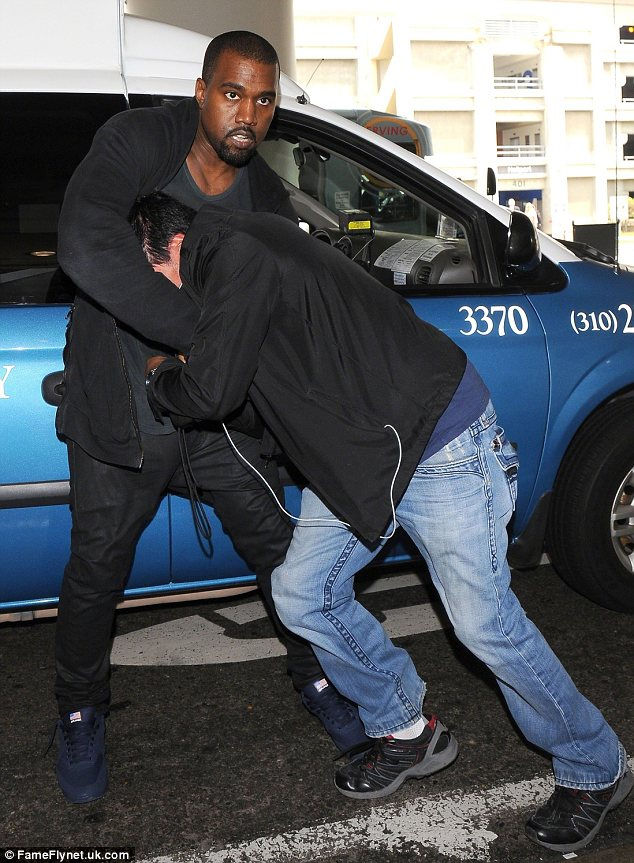
In an age where photo-oriented apps like Snapchat and Instagram dominate social media communications, today’s digital socialites could certainly attest to photography’s representative power. Not unversed to this power is Kanye West, who has documented his iconic frown via several photo shoots, most recently with his family following the birth of his son, Saint. The formal and staged picture taking process of Whitman’s time, however, draws a strong contrast against modern capabilities, a contrast that comes to define how we understand Whitman as the picturesque ideal and Kanye as the child genius who can’t seem to grow up. Although Kanye has used photo shoots as a means for self-promotion, he is not afforded the range of control Whitman was able to exercise over his image’s publication. It is no secret that Kanye has built a derisive relationship with the paparazzi, who have been known to take every opportunity to photograph Kanye and his wife Kim
Kardashian. Between walking through LAX and pulling out of his driveway at 4 am, the paparazzi have captured and distributed Kanye in full color, completely abolishing the control Whitman was afforded. Of course, this has led Kanye to offer some provocative criticism for his involuntary photo shoots, comparing paparazzi to high school bullies and rapists. Kanye does not share Whitman’s quest for idyllic representation however, as he said in his New York Times interview “I don’t have some type of romantic relationship with the public. I’m like the anti-celebrity.”


Ironically, the attitudes expressed by each artist counter their respective intent to gain or diminish transparency. As much as Whitman wanted to be known by his readers, his extraneous collection of photographs has done more to buttress the pictorial idea of Whitman rather than deliver his real self. By the tail end of Whitman’s life, he shared Kanye’s disdain for photographer’s, saying “they have used me for a show-horse again and again and again.” Whitman’s attitude shift was due in part to his realization that the self-knowing Whitman could never match the Whitman distributed to the public. “I meet new Walt Whitmans every day,” he laments, “I don’t know which Walt Whitman I am” (Folsom). In Kanye’s case, the self-proclaimed “anti-celebrity” has become one of the most renown artists worldwide. Again, our subject has made his own fate, as Kanye is often sought out for the very antics that express his “anti-celebrity” ambitions. Why stalk out Kanye at 4:00 am? Because Kanye might ask us the same question, and perhaps offer an opinion of his own on the matter. The more Kanye resists celebrity culture, the more celebrity culture will find Kanye. Thus, although Whitman might not choose to step into Kanye’s whimsically recorded life, both artists would perhaps endear the representative consequences of each other’s era; Kanye being the idyllic artist and Whitman being the transparent celebrity.
Comments